
Bump on Bottom of Foot: Causes and When to Seek Care
Compare clues for calluses, plantar warts, blisters and arch lumps. Find warning signs that need care and footwear changes that may reduce pressure.
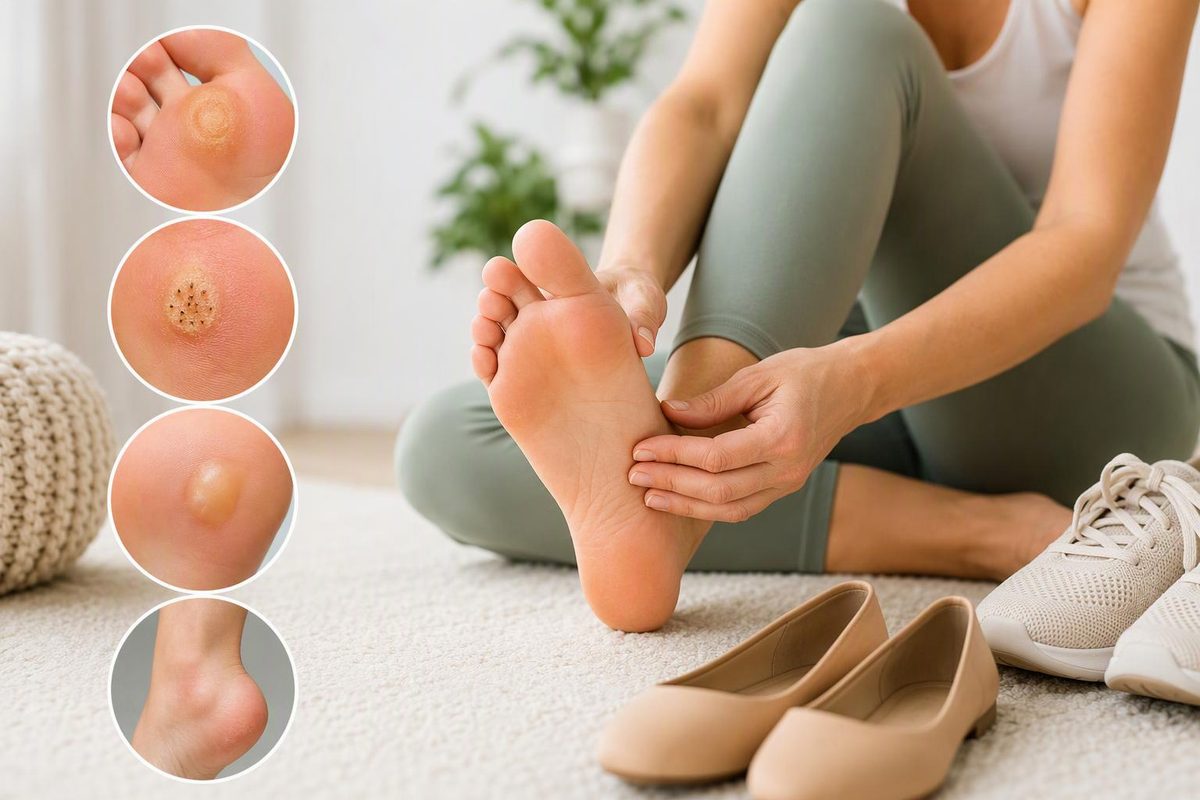
A bump on the bottom of your foot may be a callus or corn, a plantar wart, a blister or a deeper lump such as a plantar fibroma. The first useful distinction is whether it is part of the skin or beneath it. Appearance can guide your next step, but cannot confirm the cause: do not cut, freeze or apply acid to an unexplained bump. A hot or red lump, spreading swelling, or a puncture injury needs prompt medical attention.
Choose the closest descriptions; the tool shows the next step, not a diagnosis.
Find Your Next Step
The Cause Is Still Unclear
Choose your descriptions to check the next step. Until the cause is clear, do not cut, freeze or apply acid to the bump.
Skin texture and location can suggest possibilities, but cannot confirm a diagnosis.
Appearance Clues and Limits
- Callus or corn: repeated pressure or friction can thicken skin. A corn has a smaller, deeper hard centre.
- Plantar wart: tiny black dots and interrupted skin lines are clues, not a diagnostic test.
- Blister: cover with a soft plaster or padded dressing, avoid the rubbing shoe and do not deliberately burst it.
- Arch lump: a plantar fibroma is one possibility. A firm lump needs identification before selecting an orthotic to offload it.
If JavaScript is unavailable: seek emergency care for suspected infection with the emergency signs above, same-day advice for infection signs, and care right away after a puncture. Arrange assessment for a growing, fixed, bleeding, changing, activity-limiting or persistently unexplained lump. Higher-risk feet need advice before self-treatment.
Sources: NHS guidance on lumps, abscesses, cellulitis, blisters and corns; Mayo Clinic wart guidance; ACFAS puncture-wound and plantar-fibroma guidance, linked in the article.
Warning Signs Need Care Before Footwear Changes
Seek same-day medical advice if the lump is painful, hot or red, redness or swelling is spreading, or you have fever or chills. These can be signs of infection; redness may be less obvious on brown or Black skin. An abscess—a pocket of pus—may need drainage or other treatment. NHS guidance on skin abscesses
Seek emergency care if suspected infection is accompanied by fast breathing or a racing heartbeat, confusion, or feeling faint. These can signal serious complications. NHS cellulitis guidance
If the bump appeared after stepping on glass, a nail or another sharp object that pierced the skin, seek care right away. A small entry hole can hide a retained object or deeper injury. Do not dig into the area to search for it. American College of Foot and Ankle Surgeons guidance on puncture wounds
Arrange an examination if the lump grows, is hard and fixed in place, or remains unexplained after two weeks. Bleeding, changes in shape or colour, and pain that limits your activities also warrant assessment. An uncertain deeper lump may need imaging or a tissue sample rather than another footwear change. NHS guidance on lumps
The Surface and Location Help Narrow the Possibilities
Look at the area in good light without scraping or squeezing it. Note when it appeared, whether it followed rubbing or an injury, and whether it is changing. The descriptions below are clues to discuss with a clinician, not tests that establish a diagnosis.
| Appearance | Possible Cause | Useful Clue |
|---|---|---|
| Thick, rough skin | Callus or corn | At a pressure point |
| Rough growth | Plantar wart | Tiny black dots |
| Fluid-filled bump | Friction blister | Followed rubbing |
| Firm lump under skin | Plantar fibroma | Within the arch |
Thick Skin at a Pressure Point Suggests a Callus or Corn
A callus is a thickened patch caused by repeated pressure or friction, often under the ball of the foot or heel. A corn is smaller and deeper, with a hard centre that may hurt when pressed. Both can look raised.
Tight shoes can squeeze the foot, while loose shoes can let it slide and rub. Changing the pressure may help a confirmed corn or callus, but does not prove that a raised patch is one. Mayo Clinic: corns and calluses
A Rough Growth With Black Dots May Be a Plantar Wart
A plantar wart is a virus-related growth on the sole. It may interrupt the normal skin lines and contain pinpoint black dots. Those dots are small clotted blood vessels, not “seeds.” Weight-bearing pressure can push the wart inward beneath hard skin, making it resemble a callus.
Have the growth assessed if you are unsure it is a wart, or if it bleeds, changes or interferes with activities. People with diabetes, reduced feeling in their feet or a weakened immune system should seek advice before treating a suspected wart themselves. Mayo Clinic: plantar warts
For a closer comparison, see foot wart versus callus.
A Fluid-Filled Bump After Rubbing Suggests a Blister
A friction blister is more likely if the bump developed after footwear rubbed the area or after a long walk. Blood blisters form when small blood vessels are damaged too.
Keep it clean, cover it with a soft plaster or padded dressing, and stop wearing the shoe that caused it until it heals. Do not deliberately burst it or peel away its skin. NHS blister guidance
A Firm Arch Knot May Be a Plantar Fibroma
A plantar fibroma is a benign fibrous nodule within the plantar fascia, the band of tissue running from heel to toes. It typically feels like a firm lump in the arch and may hurt when the shoe or ground presses against it.
A confirmed fibroma is noncancerous, but not every firm arch lump is a fibroma. For a confirmed, stable fibroma, a clinician may recommend an orthotic that shifts weight away from the nodule. An arch support pressing directly against it may instead be uncomfortable. Nonsurgical care can relieve pain without making the lump disappear. American College of Foot and Ankle Surgeons: plantar fibroma
See possible causes of a knot in the arch if this matches the location.
Shoe Fit Can Reduce Pressure, Not Diagnose the Bump
For a confirmed pressure-related corn or callus, start with fit rather than a particular shoe brand. The forefoot should not be squeezed, and your toes should have room to move. Try shoes with your usual socks and any prescribed inserts already inside; adding an insert should not make the shoe tight.
A comfortable, supportive shoe with a low heel and soft sole may help. A nonmedicated protective pad can reduce pressure on a confirmed corn or callus. Reduce long walks or prolonged standing while the pressure spot is sore rather than pushing through rubbing.
These measures are advice for corns and calluses, not treatment for every unexplained sole lump. If you have diabetes or poor circulation, seek advice before treating a suspected corn or callus yourself. NHS corn, callus and footwear guidance
Avoid Destructive Treatments Until the Cause Is Clear
Do not use acid corn removers, home freezing or attempts to shave an unidentified bump. Salicylic-acid products can irritate healthy skin and lead to infection; cutting thickened skin can also cause infection. Mayo Clinic treatment precautions
If you have diabetes, poor circulation, reduced sensation or a weakened immune system, seek advice about an unexplained bump rather than trying to identify and remove it yourself. A clinician can often identify the cause by examination. Bring the shoes and inserts that press on the area so the pressure problem can be assessed alongside the lump.