
Bump on Back of Heel: Causes and Shoe-Fit Changes
A back-of-heel bump may be bone, swollen tissue or a thickened Achilles tendon. Learn the clues, shoe-fit changes and when to get it checked.
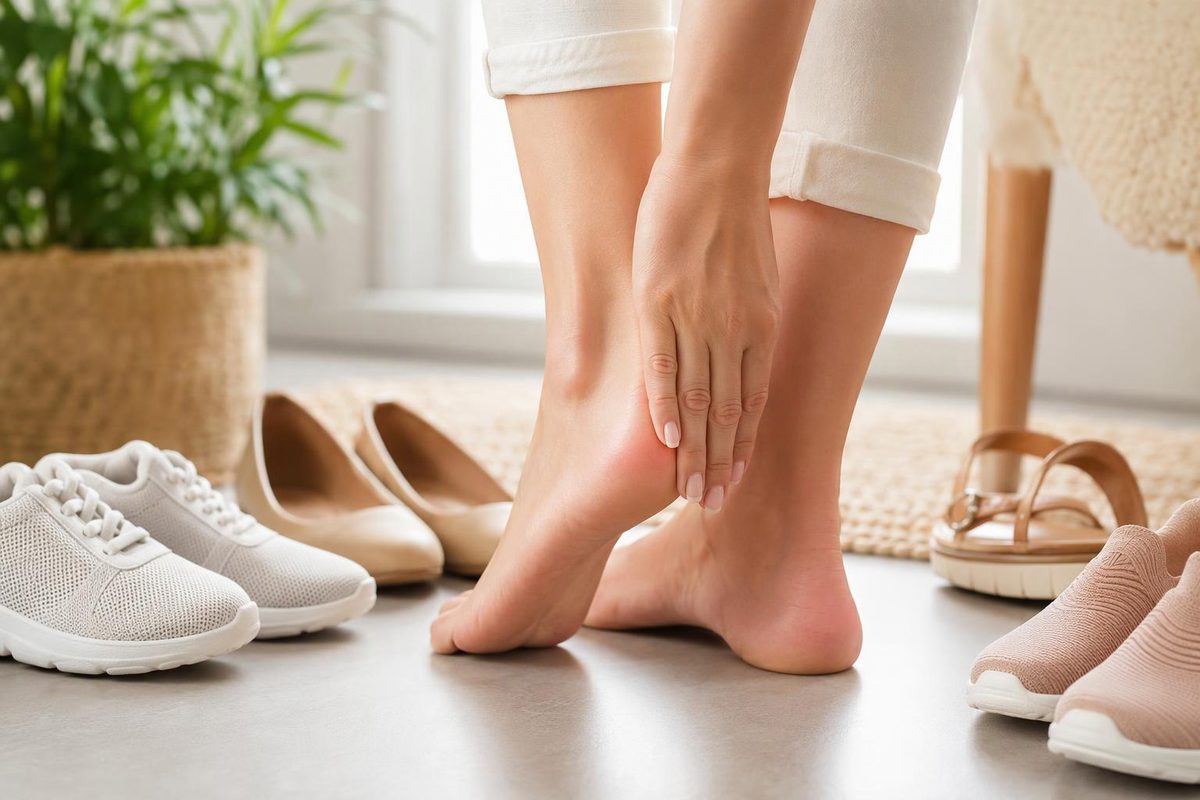
A bump on the back of your heel may be a bony prominence called Haglund’s deformity, swelling from bursitis, or a thickened Achilles tendon. These can occur together, so a hard-feeling lump is not enough to identify the cause. A superficial blister from shoe rubbing is another possibility. The useful distinction is whether the bump involves skin, bone or the tissues around the tendon—not simply whether your shoe touches it.
What the location and symptoms can suggest
A hard prominence at the upper back of the heel
Haglund’s deformity is an enlargement of the heel bone near the Achilles tendon. It can affect one or both feet. A rigid shoe back can press against the prominence and irritate the surrounding soft tissue, causing pain, redness and swelling. The nickname “pump bump” does not mean it only affects people who wear heels: dress shoes and ice skates can also aggravate it.
Importantly, reducing that irritation may settle the pain without making the bony bump smaller. These features are described in the American College of Foot and Ankle Surgeons’ Haglund’s guidance.
Tender swelling around the heel and tendon
Bursitis means inflammation of a bursa—a small fluid-filled cushioning sac. The bursa between the Achilles tendon and heel bone can become inflamed alongside a Haglund’s prominence. Dull aching pain, redness and swelling fit bursitis, but they do not prove it; tendon problems may produce overlapping symptoms. See the ACFAS explanation and NHS heel-pain guidance.
For more about swelling at different pressure points, read our guide to bursitis in the foot.
Thickening along the Achilles tendon
The Achilles tendon connects the calf muscles to the heel. Achilles tendinopathy describes tendon damage that can cause thickening, pain and stiffness.
When the problem is where the tendon attaches to the heel, it is called insertional Achilles tendinopathy; bone spurs can also form there. Thickening farther up the tendon may reflect noninsertional tendinopathy. Morning stiffness and pain that worsens with activity are useful clues, especially after an increase in running or other exercise. Shoe changes can also increase strain. The American Academy of Orthopaedic Surgeons explains these patterns.
A back-of-heel prominence is therefore not necessarily the plantar heel spur discussed in our heel spur versus plantar fasciitis guide, which concerns pain underneath the heel.
A raised area on the skin after rubbing
A blister is more superficial than a bony or tendon lump. If it appeared after rubbing, stop wearing the shoe that caused it until it heals, keep it clean and protect it with a soft plaster or padded dressing. Do not burst it yourself or peel away its skin. These are the NHS recommendations for blister care.
Shoe changes that can reduce pressure
For a mildly sore bump without the warning signs below, start by removing direct pressure rather than trying to “break in” the painful shoe. Soft-backed or open-backed footwear can reduce irritation from Haglund’s deformity or insertional Achilles problems, according to ACFAS and AAOS.
Use these practical fit checks:
- Check the exact contact point. The top edge, seam or stiff heel counter—the structure holding the back of the shoe—should not press into the bump.
- Check heel hold while walking. Look for a comfortable fit that does not repeatedly slide and rub. Buying a longer shoe solely to escape pressure may leave the heel moving inside it.
- Retest with your usual socks and any insert. Extra padding occupies space. Keep it only if the shoe feels less restrictive and the sore spot is not compressed.
- Match footwear to the activity. A backless shoe may remove contact during ordinary low-risk use, but it is not a substitute for secure footwear needed for exercise or work.
Heel lifts can reduce Achilles strain, but they also change where the heel sits against the shoe. Ask a clinician whether one suits your problem, then recheck contact at the collar. Reduce activities that worsen tendon pain and ask for an exercise plan matched to the affected tendon area. Do not start stair-edge heel drops on your own: AAOS describes these for noninsertional tendinopathy and recommends initial physical-therapist supervision, because incorrect technique can damage the tendon.
When to get the bump examined
Seek urgent assessment after an injury if there was a pop or snap, severe pain, or difficulty walking or pushing up onto your toes. This may indicate an Achilles rupture or fracture rather than a routine pressure bump. Seek prompt care for a blister with heat, surrounding redness or pus; redness can be harder to see on brown or black skin. (Heel injury warning signs; infected blister guidance.)
Arrange an appointment for a new unexplained lump that is growing, hard and fixed, painful, or still present after two weeks. You do not need to wait two weeks if it is growing or has other concerning features. Heel pain that worsens, keeps returning or limits normal activity also needs assessment. Do not rely on shoe changes alone if you have diabetes and heel pain, or tingling or loss of sensation. (NHS lump guidance; NHS heel-pain guidance.)
An examination can help separate bone from tendon or bursal swelling. If needed, an X-ray can show the heel’s bony structure or spurs; ultrasound or MRI may help assess the tendon. Treatment then targets the painful tissue—not just the visible bump. AAOS describes the examination and imaging options.