
How Long Do Orthotics Last? Type and Use Matter
Providers commonly cite 1-5 years for custom devices, but age is only a prompt to inspect. A sound shell may be refurbished instead of replaced.
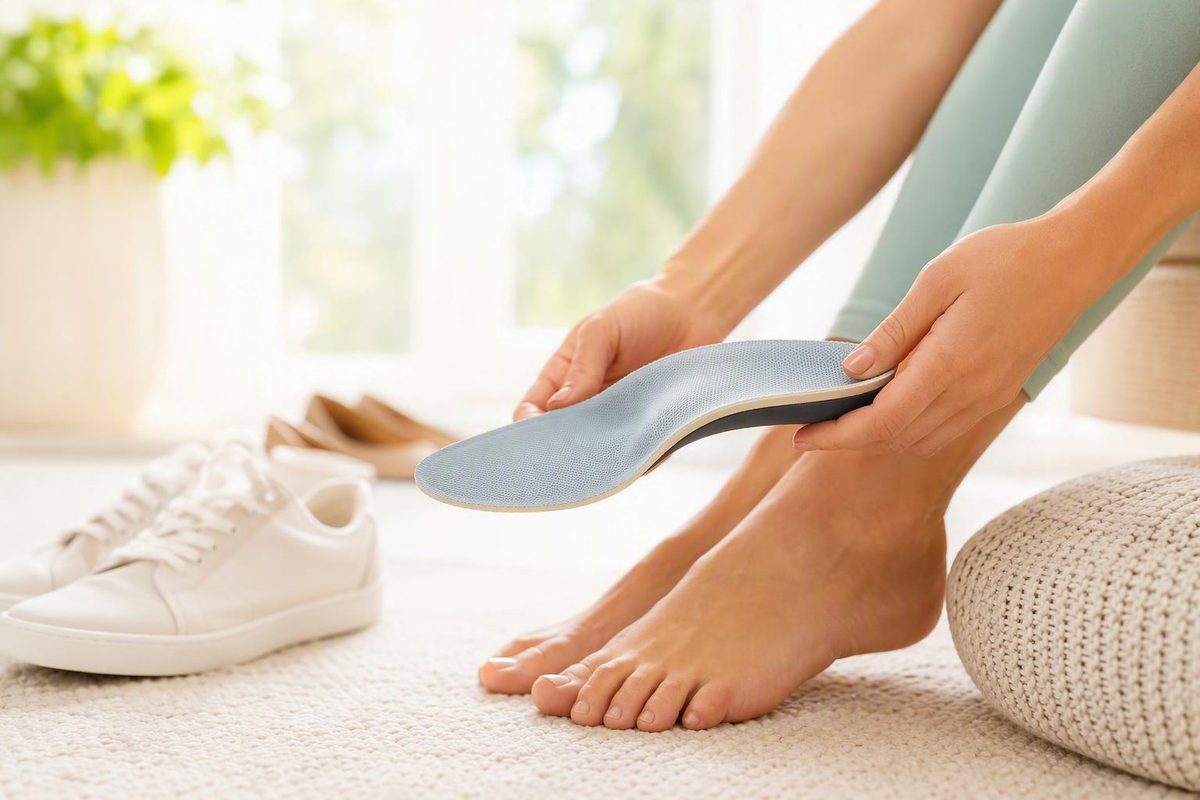
The short answer: orthotic lifespan depends on what you wear
Custom prescription orthotics can remain usable for years, but they do not have a universal expiration date. Their condition, fit, support, compatibility with your shoes, and suitability for your current needs matter more than the purchase date alone.
Clinics and orthotic providers commonly cite a broad one-to-five-year range for custom orthotics, with about two to three years often used as a rough adult benchmark. These are provider-derived estimates—not research-established replacement schedules, guarantees, or deadlines. One podiatry provider says two to three years is typical while noting that some devices need attention after one year and others may remain usable for up to five years, depending on construction and use (Foot Specialists of Birmingham’s custom-orthotic guidance).
Medically reviewed guidance from Cleveland Clinic is more cautious: prescription orthotics can last for years, but no precise average is assigned. Longevity varies with factors such as the device’s materials, activity level, weight changes, and care (Cleveland Clinic’s overview of orthotics).
Over-the-counter products generally have shorter expected lives, but “shoe insert” describes several different products. A thin foam comfort insole, gel heel pad, structured retail arch support, and prescription custom orthotic should not be treated as though they share the same construction or replacement interval.
| Type of device | Cautious lifespan expectation | What often determines the endpoint |
|---|---|---|
| Rigid or semi-rigid custom prescription orthotic | Often several years | Shell integrity, current fit, prescription suitability, and wear to covers or posts |
| Soft custom prescription orthotic | Potentially shorter-lived than a rigid shell | Compression, flattening, loss of cushioning, and fit changes |
| Structured over-the-counter arch support | Commonly several months to about a year | Frequency of use, material fatigue, deformation, and loss of support |
| Basic foam or gel comfort insert | Often measured in months | Cushion compression, tearing, thinning, and reduced comfort |
These categories are estimates, not promises. Clinic guidance says many retail inserts wear out after a few months of daily use, while a custom device’s soft cover may deteriorate before its structural shell. Commercial estimates for retail products include three to six months for gel inserts, four to eight months for foam inserts, and six to twelve months for over-the-counter orthotic supports, but the seller also says that material, activity, pressure, moisture, and use frequency affect the result (Dr. Comfort’s insert-lifespan estimates).
Product construction varies even within the same label. Two “foam insoles” may use different densities, thicknesses, fabrics, adhesives, and reinforcement. Check any manufacturer care instructions, warranty terms, or guidance supplied by the prescribing clinician. Device-specific information may be more useful than a general online average.
Why age alone cannot tell you whether an orthotic is worn out
An orthotic’s functional lifespan is the period during which it continues to fit, provide its intended support, and remain suitable for the wearer’s current needs. That period may be shorter or longer than its ownership age suggests.
Consider two pairs bought on the same day:
- One is worn during daily running, long work shifts, and weekend hiking.
- The other is used only in dress shoes for occasional events.
Although they are the same chronological age, they have accumulated very different amounts of loading, moisture, bending, and compression. An orthotics provider compares this with tire mileage: the intensity and amount of use matter more than time owned, and its suggested two-to-three-year interval is expressly described as a rule of thumb rather than an exact limit (Applied Biomechanics on replacement timing).
Materials also tend to decline gradually. Foam can compress a little at a time, a top cover can thin at pressure points, and bonded layers can begin separating. A semi-rigid shell may fatigue or distort. There may be no single moment when the orthotic switches from “good” to “expired.”
It helps to distinguish the structural shell from the soft components attached to it:
- The shell forms the main base and shape of many custom orthotics.
- The top cover provides the surface against the foot or sock.
- Padding or cushioning softens selected areas.
- Posts or wedges may influence how the device sits or functions.
The top cover, padding, or cushioning may wear before the shell. Frayed fabric or a compressed pad therefore does not necessarily mean that the complete custom device has reached the end of its life. Some devices can be refurbished when the shell remains sound.
The reverse is also possible: a clean-looking orthotic may no longer be suitable after changes in the wearer’s feet, gait, body weight, health, activity, or footwear. Light stains, discoloration, and superficial scuffs do not establish that support has failed, while an intact appearance cannot confirm that the device remains appropriate.
Use age-based ranges as reminders to inspect—not as instructions to discard. A stable three-year-old custom orthotic that still fits and functions may not require automatic replacement. A six-month-old foam insert that has flattened and begun slipping may already need attention.
Signs your orthotics need inspection or reassessment
No single home observation can prove that an orthotic is effective or ineffective. A combination of physical wear, fit changes, and symptoms provides a more useful reason to inspect it or arrange reassessment.
Visual signs to check include:
- Cracks through the shell or base
- Tears in soft material
- Broken edges or missing pieces
- Noticeably thin areas
- Cushioning that remains flattened
- Peeling or badly worn fabric
- Separation between bonded layers
- Warping or twisting
- Buckling in the heel or arch
- Loss of the original arch contour
- Deep or uneven depressions that were not present before
Podiatry-provider guidance identifies cracking, broken sections, thinning, warping, buckling, returning discomfort, and uneven shoe-sole wear as reasons to have custom orthotics reviewed. The same guidance notes that minor stains or scuffs alone are unlikely to require replacement (Texas Foot and Ankle Center’s replacement checklist).
Fit-and-function changes include:
- The orthotic slides forward, backward, or sideways.
- Your foot feels less stable in a familiar shoe.
- The shoe feels unexpectedly loose or crowded.
- Cushioning feels substantially reduced.
- The arch or heel no longer feels supported as before.
- The orthotic rocks or no longer sits correctly.
- An edge lifts or presses into the foot.
- The device behaves differently in shoes where it previously fit well.
Symptom-related signals include:
- The original discomfort returns.
- New foot or ankle pain develops.
- Your feet tire earlier during a typical day.
- Corns or calluses appear or change.
- Redness, rubbing, or other skin irritation develops.
- Pressure is felt in a new location.
- You begin altering how you walk to avoid discomfort.
Pain, corns, calluses, visible damage, and uneven shoe wear are all cited by podiatry providers as reasons to consider professional evaluation, but they do not establish the cause by themselves (Caring Podiatry’s replacement-sign guidance).
Returning pain does not prove that the orthotic has worn out. An unsuitable or worn shoe, a change in activity, an injury, a physical change, or progression of the original problem could also be responsible. Treat pain as a reason to investigate, not as a do-it-yourself diagnosis.
Uneven wear requires the same caution. An unusual pattern on the orthotic or shoe outsole may reflect device wear, shoe construction, gait, loading, or several factors together. Inspect the orthotic, both shoes, and how they work as a system rather than assuming one specific cause.
Focus on shape, fit, support, skin effects, stability, and symptom changes—not cosmetic appearance alone.
What makes orthotics wear out faster?
Orthotic lifespan is affected by five broad categories: construction, the wearer, activity, footwear, and environment. These factors modify expectations, but none predicts an exact replacement date.
1. Device construction
Material, density, thickness, flexibility, shell design, cushioning, and top-cover construction all affect durability. Provider guidance generally describes rigid plastic, graphite, carbon-fiber, and similar semi-rigid shells as retaining their shape longer than soft foam. That is a tendency, not an absolute rule; design, thickness, manufacturing, prescription, and loading also matter.
Soft components may deteriorate first because they are repeatedly compressed. A firm shell may remain sound while its cover becomes thin or its cushioning loses resilience. In an entirely soft device, flattening may affect a larger portion of the insert.
2. The wearer
Daily wear time and the load applied with each step influence cumulative stress. A device worn from morning until night experiences more loading cycles than one used for an occasional walk.
A substantial gain or loss in body weight can also affect fit, pressure distribution, or how the existing prescription feels. Cleveland Clinic identifies weight change as one factor that may create a need for earlier replacement, but there is no supported formula translating body weight into a particular number of months or years.
3. Activity
Running, jumping, court sports, hiking, long walking distances, and prolonged standing generally create more cumulative stress than occasional low-impact use.
For example:
- A daily runner notices that the foam beneath the heel stays flattened and no longer feels cushioned.
- A worker who stands through long shifts finds that the top layer has compressed at the forefoot.
- An occasional user has a rigid custom shell that still sits securely and feels supportive after several years.
The first two devices may need attention before the third even if they are newer.
4. Footwear
An orthotic works inside a shoe, so the shoe is part of the fit. Interior depth, width, heel shape, midsole stability, fastening, wear, and available space can all affect how the device sits.
A narrow shoe can crowd the foot after an orthotic is added. A very different shoe shape can change how the same orthotic feels.
A major footwear change therefore justifies checking fit rather than assuming the orthotic will perform identically. Moving one pair among several shoes may be convenient, but compatibility must be judged shoe by shoe.
5. Environment
Providers commonly identify sweat, persistent moisture, humidity, extreme heat, and inadequate drying as factors that may accelerate deterioration. St. Cloud Foot & Ankle includes moisture, extreme heat, chemical exposure, footwear, maintenance, activity, and daily wear time among the variables influencing custom-orthotic lifespan (St. Cloud Foot & Ankle’s durability guidance).
These influences interact. A foam insert used for daily running in damp shoes has a different service environment from a semi-rigid custom shell worn occasionally in dry, stable footwear. Neither scenario produces an exact expiration date.
A four-way decision: continue, assess, refurbish, or replace
Noticing wear does not automatically mean buying a new pair. There are four reasonable outcomes.
Continue using the orthotic when it:
- Remains structurally stable
- Fits securely in its usual shoes
- Provides the expected support and cushioning
- Has no major distortion or thinning
- Causes no new pressure, irritation, or symptoms
- Still suits your current activity and footwear
Continue inspecting it periodically. Age can prompt a closer look without dictating disposal.
Arrange an assessment when:
- Previous pain returns or new pain develops
- Fatigue occurs earlier than usual
- Fit or stability changes
- Shoe wear becomes notably uneven
- The device appears intact but support feels different
- Your feet, gait, health, body weight, activity, or footwear have changed
- You are unsure whether visible wear is meaningful
An assessment need not result in replacement. Its purpose is to identify whether the issue comes from the orthotic, the shoe, the wearer’s current needs, or another cause.
Consider refurbishment or adjustment when the main shell is sound but a replaceable component has deteriorated. Depending on the construction and the wearer’s needs, a provider may consider replacing a cover or post, adding cushioning, or adjusting part of the device. Clinic guidance says top covers and posts can sometimes be replaced when the core shell remains intact, although suitability requires individual inspection (Illinois Foot & Ankle Clinic on orthotic refurbishment).
Follow the prescribing clinician’s or manufacturer’s instructions rather than attempting to reshape or structurally modify a custom device yourself.
Replacement becomes more likely when there is:
- A crack through a structural part
- A broken or missing section
- Substantial thinning
- Persistent flattening with reduced support
- Major warping or distortion
- Buckling that affects fit
- A fit problem that cannot be corrected in the intended shoes
- A prescription or design that no longer matches the wearer
Check the shoes at the same time. Replacing a sound orthotic will not correct footwear that is worn out, too shallow, unstable, or incompatible. Replacing a shoe may likewise fail to solve a genuinely distorted orthotic. The useful question is how the foot, device, and footwear function together.
How to inspect orthotics at home without overdiagnosing the problem
A simple, repeatable check can help you notice changes. It cannot measure biomechanics or confirm that a prescription remains appropriate.
- Remove both orthotics. Take them out rather than examining only the visible surface.
- Compare left with right. Some asymmetry may be part of the original design, so look for changes rather than assuming both should be identical.
- Inspect the heel and arch. Look for flattening, deep compression, cracking, buckling, or loss of contour.
- Check the edges and layers. Note tears, peeling, separation, sharp areas, and broken sections.
- Look for thin spots. Pay particular attention to the heel, ball of the foot, and added cushioning.
- Place each device on a level surface. Notice obvious rocking, twisting, or distortion without forcing or stress-testing it.
- Return it to a familiar shoe. Confirm that it lies flat, stays in place, and does not crowd the heel or toes.
Then compare its current performance with how it felt earlier:
- Is the cushioning noticeably firmer, thinner, or flatter?
- Does the arch feel lower or less supportive?
- Does your foot move more inside the shoe?
- Are you less stable during ordinary walking?
- Do your feet tire sooner after a typical day?
- Does the orthotic feel normal in one shoe but uncomfortable in another?
Inspect the shoes as well. Look for a worn interior, a folded or compressed factory liner, inadequate depth, a damaged heel area, or uneven outsole wear. If the original removable liner was supposed to come out before the orthotic was inserted, confirm that it has not been left underneath and reduced the available space.
A short symptom note can help identify patterns. Record:
- Where pain, pressure, fatigue, or irritation occurs
- When it starts
- Which shoes you were wearing
- The activity and its duration
- Whether one side or both are affected
- Whether changing or removing the orthotic alters the problem
This information does not diagnose the cause, but it may make a professional review more productive.
A reassessment may consider the feet, physical wear, orthotic fit inside the shoes, walking pattern, symptoms, activity, footwear, and relevant health changes. Some commercial providers recommend annual checks for custom devices. That is recurring provider guidance rather than a universal evidence-based requirement, and it should not be interpreted as an annual replacement mandate.
Care practices that may preserve functional life
Begin with the instructions supplied for your device. Materials, covers, adhesives, and finishes differ, so manufacturer or clinician guidance should take priority over general cleaning advice.
When gentle washing is permitted:
- Remove the orthotics from the shoes.
- Use mild soap and slightly warm water.
- Wipe or hand-clean them without prolonged soaking unless specifically allowed.
- Avoid bleach, solvents, and harsh household cleaners.
- Do not machine-wash them unless the instructions explicitly permit it.
- Let them air-dry completely before returning them to the shoes.
St. Cloud Foot & Ankle advises gentle hand-washing with mild soap and slightly warm water followed by complete air-drying. Its guidance also identifies excessive moisture and extreme heat as possible durability factors.
Remove orthotics from wet or sweaty shoes so both the device and footwear can dry. Avoid radiators, clothes dryers, heating vents, hot cars, and other sources of concentrated heat, which may affect certain materials or bonded layers.
Cleaning is also a convenient time to inspect covers, edges, and layers. Handle the device normally rather than repeatedly bending or twisting it in an attempt to test its strength.
Available provider guidance does not quantify how much longer this makes an orthotic last, and different shoes may require different fits.
Store unused orthotics in their normal shape in a dry place away from excessive heat. Good care may slow deterioration, but it cannot prevent eventual compression, material fatigue, physical changes in the wearer, or loss of fit.
When physical changes or warning symptoms matter more than wear
An orthotic may need review even when it looks nearly new. The device was selected or made for a particular foot, body, activity pattern, and footwear environment. Changes in any of those can alter fit or loading.
Reassessment may be appropriate after:
- Growth or age-related changes
- Substantial weight gain or loss
- Pregnancy
- An injury
- Surgery
- A changed walking pattern
- A major increase or decrease in activity
- A new occupation involving more standing or walking
- A switch to substantially different footwear
For children, growth may make fit the limiting factor before materials wear out. One commercial orthotics provider advises pediatric reassessment or adjustment every six to twelve months, but this is provider guidance rather than a universal replacement schedule. Growth, device type, fit, symptoms, and the child’s clinical plan should guide the decision (Pongratz Orthotics & Prosthetics’ pediatric guidance).
Recurring or new pain, altered walking, repeated skin irritation, major deformation, or uncertainty about fit warrants professional reassessment rather than an automatic insert change. The site’s safety notice advises clinical attention for sudden severe pain, spreading redness, or numbness, with particular caution for people who have diabetes.
This article provides general educational information, not individualized medical care, as explained in The Shoes for Me’s Terms of Use. It cannot determine whether a symptom comes from an orthotic, footwear, an injury, or an underlying condition.
There is an important limitation behind the usual lifespan numbers: most precise estimates in the available sources come from clinics, orthotic providers, or sellers offering related products or services. Their pages generally do not cite independent comparative durability studies. Repetition of a one-to-five-year range across provider websites does not turn it into a proven expiration schedule.
Frequently asked questions
Do custom orthotics need to be replaced every two or three years?
No. Two to three years is a commonly quoted provider benchmark for adults, not a mandatory replacement interval. Some devices need attention sooner, while others remain functional for up to five years or longer in individual cases (Foot Specialists of Birmingham’s lifespan guidance).
At that point, inspect the shell, covers, cushioning, fit, and footwear. If the orthotic remains stable, supportive, comfortable, and suitable for your current needs, its age alone does not require disposal.
Can the top cover be replaced without replacing the entire custom orthotic?
Sometimes. A soft top cover, pad, cushion, or post may wear before the structural shell. If the shell remains sound and the underlying prescription is still appropriate, a professional may be able to refurbish or adjust the device instead of replacing it completely.
Whether that is possible depends on its construction, damage, purpose, and current fit. Peeling fabric alone does not prove that the shell has failed, but separated layers or exposed edges should be checked before continued use.
Should I replace an orthotic if pain returns but it looks undamaged?
Do not assume replacement is automatically the answer. An intact orthotic can become unsuitable, but returning pain can also relate to worn or incompatible footwear, changed activity, an injury, a physical change, or the original problem.
Check the device and shoes together, note when the pain occurs, and arrange reassessment if it persists or changes how you walk. Appearance alone cannot confirm that an orthotic is still functioning as intended.
Do runners and people who stand all day need replacements more often?
They may. Running, repeated impact, long walking distances, and prolonged standing generally create more cumulative loading than occasional use. Soft cushioning may therefore compress sooner, especially with daily wear and persistent moisture.
That does not create a fixed schedule for every runner or standing worker. Training volume, activity surface, device construction, footwear, loading, and care all matter. Inspect the device more often and respond to flattening, instability, reduced support, fit changes, or returning symptoms.
How often should children’s orthotics be checked or replaced?
Children’s orthotics should be reviewed according to growth, fit, symptoms, and the clinician’s plan. Limited provider guidance suggests checks or adjustments every six to twelve months because growing feet can outgrow an otherwise intact device. This is a reassessment interval, not evidence that every child needs a new pair on that schedule (Pongratz Orthotics & Prosthetics’ guidance).
Arrange an earlier review if the orthotic becomes tight, leaves pressure marks, no longer sits correctly, causes discomfort, affects walking, or does not fit the child’s current shoes.
The practical rule: use time as a reminder to inspect orthotics, not as an automatic expiration date. If a device remains stable, comfortable, supportive, and compatible with your current feet and shoes, age alone may not justify replacement. Cracks, persistent flattening, poor fit, recurring symptoms, skin irritation, altered walking, or major physical changes call for reassessment; the appropriate result may be adjustment, refurbishment, or replacement. The commonly quoted lifespan ranges remain rough provider estimates, while sudden severe pain, spreading redness, or numbness deserves clinical attention rather than a trial-and-error insert change.