
Compression Socks for Foot Pain: When They May Help
Compression socks may ease swelling-related foot pain. Learn when shoe changes matter more, how to choose pressure and fit, and when to seek care.
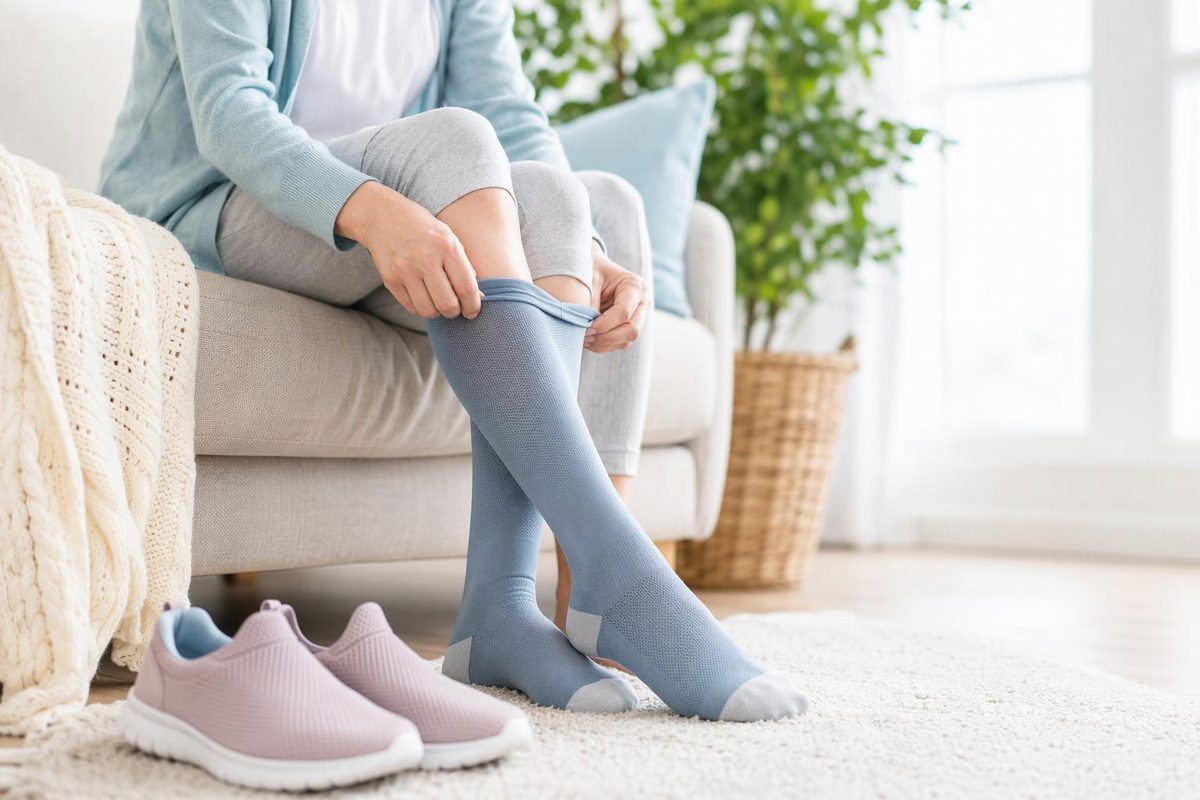
Compression socks may help when foot pain comes with fluid-related swelling, but they are not an all-purpose treatment for sore feet. Their main role is to support circulation and reduce fluid buildup—not to cushion the sole or create more room inside a tight shoe. NHS inform explains their use for swelling of the feet, ankles and legs.
The useful first question is therefore: Does swelling seem to contribute to the aching, or is pain concentrated at a heel, joint or shoe-pressure point? These can overlap, and the pattern alone does not establish the cause.
Which kinds of foot pain may benefit?
Aching with swollen feet and ankles
Compression is used to manage diagnosed venous problems, such as chronic venous insufficiency—when leg veins do not return blood effectively—and some types of chronic swelling. Graduated socks apply the greatest pressure at the ankle, with pressure decreasing up the leg to support blood returning toward the heart. They may reduce associated aching, but do not cure the underlying vein problem. Clinical review in CMAJ.
Swelling after prolonged sitting or standing can also make feet uncomfortable. However, swelling can have other causes, including medication effects, injury, infection, and heart or kidney problems. Do not use improvement in a sock as proof that the cause is harmless. For mild swelling, movement breaks, elevation and wide, comfortable shoes are also useful measures. If swelling in both feet does not improve after a few days of home care, or gets worse, arrange medical advice. NHS swelling guidance.
Heel or arch pain, especially on the first steps
This pattern can occur with plantar fasciitis, although other conditions can cause heel pain. Do not rely on a compression sock as the main treatment. Clinical guidance emphasizes reducing aggravating activity, calf and plantar-fascia stretching, and supportive, cushioned shoes or inserts. AAOS plantar fasciitis guidance.
A short arch sleeve is a different choice from a graduated leg sock. If that is what you are considering, see our separate guide to foot sleeves for plantar fasciitis.
Ball-of-foot pain or burning toward the toes
Do not assume more squeezing means more support. For Morton’s neuroma, a painful forefoot nerve condition, first-line care includes avoiding aggravating activities and choosing a wide toe box, avoiding high heels, and using suitable forefoot cushioning. Mayo Clinic treatment guidance.
For a broader look at cushioning and fit, use our guide to shoes for ball-of-foot pain. A compression sock should not replace addressing a shoe that crowds the forefoot.
When to get advice before wearing compression
Check with a healthcare professional before starting if you have known or suspected peripheral arterial disease—reduced blood supply through the arteries—reduced sensation or neuropathy, diabetes, heart failure, or fragile or damaged skin. These do not all mean compression is impossible, but they can require assessment and modified treatment. Severe arterial disease, severe heart failure and severe diabetic neuropathy with sensory loss are among the contraindications to standard sustained compression. International compression-safety consensus.
Seek urgent assessment rather than trying socks for unexplained swelling in just one foot or leg, severe or painful swelling, swelling that starts very suddenly, or a swollen area that is red or hot—even without fever. Swollen feet in someone with diabetes also need prompt advice. Swelling accompanied by shortness of breath or chest pain needs emergency care. NHS warning signs.
If a sock causes new numbness, weakness, increasing pain or skin damage, remove it and seek prompt medical advice before wearing it again. Incorrect sizing and concentrated pressure can injure skin or nerves. Compression-safety consensus.
Choosing pressure and fit
There is no single compression strength for “foot pain.” Ask a clinician or pharmacist which level suits the reason for your swelling.
Pressure is listed in mmHg, or millimetres of mercury. For graduated socks, this refers to pressure at the ankle. A 20–30 mmHg sock applies more pressure than a 15–20 mmHg sock; stronger is not automatically better. Compression-class labels vary between standards, so compare the stated pressure rather than relying only on “class 1” or “medical grade.” CMAJ pressure classification.
For fit:
- Follow the exact product’s measurement chart rather than choosing solely by shoe size. Medical hosiery may need professional measuring and fitting.
- Check that the heel and toe sections sit correctly and the fabric lies smoothly.
- Do not size down to make the sock tighter, or roll the top down to shorten it.
- Try your shoes with the socks on. Your toes should still have room, and the upper should not press across the forefoot or instep. If the combination crowds your foot, change the shoe fit rather than accepting extra pressure.
Appropriate measurement and fitting help prevent compression complications; twisting, folds and overstretching should be avoided. CMAJ fitting guidance and Guy’s and St Thomas’ application instructions.
When to wear them
For routine daytime use, put compression socks on early in the morning, with dry skin and any moisturiser fully absorbed. Remove them for bed unless your healthcare professional has specifically instructed otherwise. Follow your prescribed schedule rather than treating the sock as something to wear continuously. NHS inform wearing guidance.
Judge usefulness by whether swelling and associated aching improve—not simply whether the sock feels tight. If discomfort continues, have the cause, pressure level and fit reviewed rather than buying stronger compression.