
Comfortable Shoes for Morton’s Neuroma: A Fit Guide
Find comfortable shoes for Morton’s neuroma by checking toe-box width, sole cushioning, heel height, closure and room for a metatarsal pad.
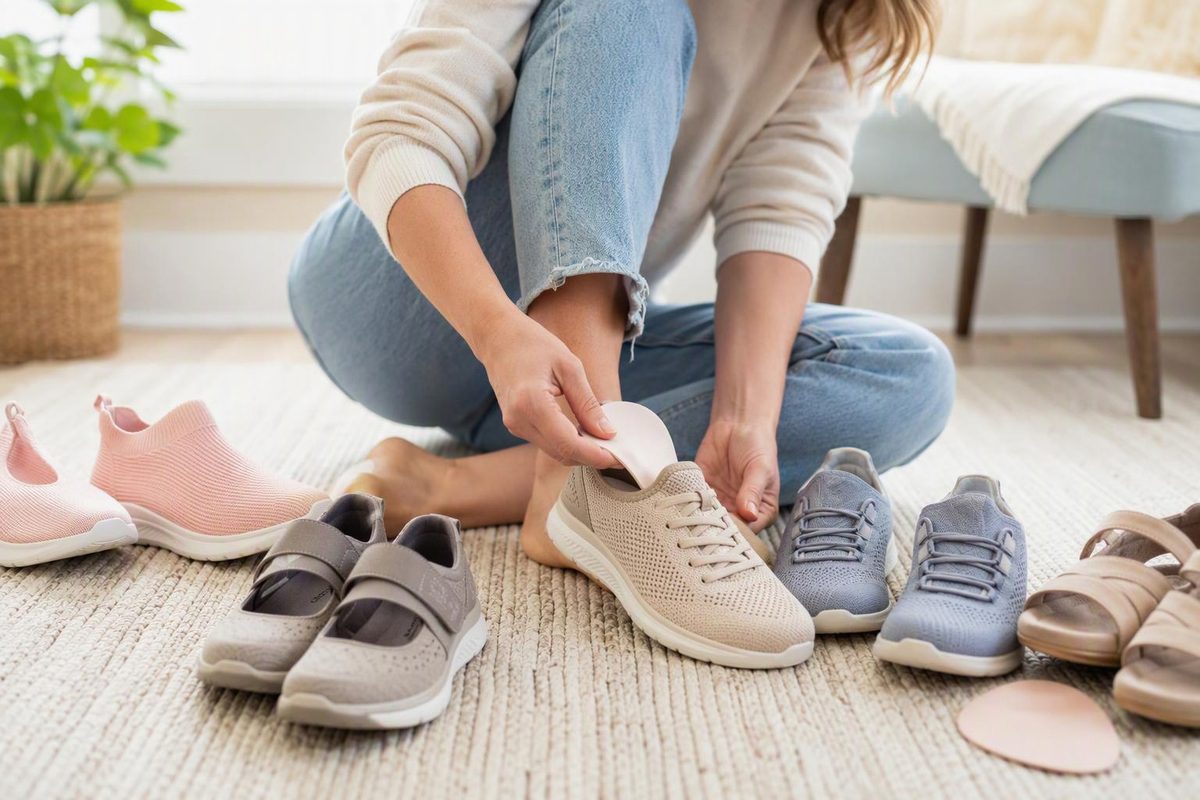
The most comfortable shoes for Morton’s neuroma usually have a wide toe box, low heel, cushioned sole and adjustable closure. The aim is to reduce squeezing and impact at the ball of the foot—not to find one universally “best” brand.
Morton’s neuroma involves irritation and thickening in or around a small nerve between the metatarsal bones, most often between the third and fourth toes. It can cause burning or shooting forefoot pain, tingling, numbness or the feeling of standing on a pebble. Tight, narrow and high-heeled shoes can aggravate it. Footwear changes may reduce pressure, but they do not guarantee a cure. The American Academy of Orthopaedic Surgeons (AAOS) recommends wider toe boxes, lower heels and soft soles as part of initial management.
What to look for
1. A toe box that is wide in the right place
Your toes and the widest part of your forefoot should sit inside the shoe without the upper pressing inward. Look for a round, square or foot-shaped front rather than a pointed one.
A “wide” label is only a starting point. Width varies by brand and model, and sizing up only to gain width can leave a shoe too long and allow the foot to slide. If width codes are unfamiliar, see what EE means in shoe width.
Also check depth. A deeper forefoot is useful if you have hammertoes, swelling or need an insole. The shoe should not press down on the toes or ball of the foot.
2. A low heel—but not necessarily a paper-thin sole
A high heel transfers more load toward the forefoot. Choose little heel elevation and avoid steeply sloped dress shoes.
However, “low heel” does not mean choosing the thinnest, most flexible shoe available. The NHS recommends a low heel and soft sole but advises against thin soles. A clinical review describes a sufficiently thick sole that is not excessively flexible as a reasonable conservative choice (Acta Biomedica review).
In practice, look for enough material under the forefoot to soften contact with hard ground. A mildly stiff or rocker-shaped sole may feel better by helping the foot roll forward, but rocker shoes are not suitable for everyone. AAOS advises people with balance difficulties or an unsteady gait to seek professional guidance before using them.
3. A secure, adjustable upper
Laces, hook-and-loop straps or an adjustable instep strap let you secure the heel and midfoot without tightening the forefoot. NHS Lanarkshire recommends laces or adjustable straps along with a deep, wide toe box.
Do not rely on a tight toe box to stop heel slip. If the heel still lifts after the midfoot is secured, that model’s shape may not suit your foot.
4. Space for an insole or metatarsal pad
A removable factory liner makes it easier to add an insert without crowding the foot. Metatarsal pads are intended to redistribute forefoot pressure, but placement matters: the pad normally sits just behind the ball of the foot, not directly beneath the painful spot. NHS Lanarkshire advises positioning it about 5 mm behind the metatarsal heads.
Evidence for insoles is encouraging but limited. In one randomized trial summarized in the clinical review, a customized insole with arch and metatarsal support improved walking pain and some measures of function in 72 participants. Results across conservative treatments are not uniformly positive, so an insert is a reasonable option to test rather than proof that footwear alone will resolve every case.
Shoe types to consider by activity
- Walking and everyday wear: Start with a walking shoe or trainer that combines a broad forefoot, cushioned midsole, secure heel and removable liner. It should feel comfortable immediately rather than requiring the toe box to be “broken in.”
- Running: Use the same forefoot-room requirements. During a painful flare, reducing running, jumping or dancing for a few weeks may matter as much as changing shoes; Mayo Clinic recommends temporarily reducing activities that put high impact through the ball of the foot.
- Work shoes or boots: Prioritize a broad safety-toe shape, adequate depth and cushioning. A nominally wide boot can still taper sharply at the toes, so check its actual internal shape.
- Dress shoes: Choose a round or square toe, low stable heel and adjustable fastening. Pointed pumps and narrow loafers are likely to increase forefoot compression.
- Sandals and house shoes: Look for cushioning and straps that hold the foot back. Loose slides and flip-flops may make the toes grip to retain the shoe, while thin soles provide little cushioning.
For options organized around walking, running, work and other uses, the ball-of-foot pain shoe guide provides a broader comparison.
Use this fit test
Try shoes later in the day, with the socks and any insert you intend to use. Fit the larger foot. The AAOS fitting guide suggests about half an inch between the longest toe and the shoe tip, while emphasizing that a larger size is not a substitute for the correct width.
Then stand and walk before deciding:
- Wiggle and spread your toes; they should not meet side pressure.
- Check that no seam or overlay crosses the painful forefoot area.
- Secure the midfoot and confirm that the heel does not slip.
- Walk briskly and turn. Reject the shoe if it triggers burning, electrical pain, tingling or numbness.
- Recheck the fit with your intended insole; it must not make the shoe shallow or tight.
When shoes are not enough
Do not assume every burning pain under the forefoot is Morton’s neuroma. A clinician can examine the foot and may use imaging to confirm the diagnosis or rule out a fracture or another soft-tissue problem.
Arrange an assessment if pain is severe, worsening, recurrent, limiting normal activity or not improving after about two weeks of self-care. Tingling, weakness or numbness also merits medical advice, as does pain following a foot injury or foot or ankle surgery (NHS). Footwear is a sensible first step, but persistent nerve symptoms may need podiatric or medical treatment.