
Early-Stage Mild Hammertoes: Signs and First Steps
Recognize a mild hammertoe, understand why flexibility matters, check shoe fit, and learn when pads, exercises or a podiatry assessment may help.
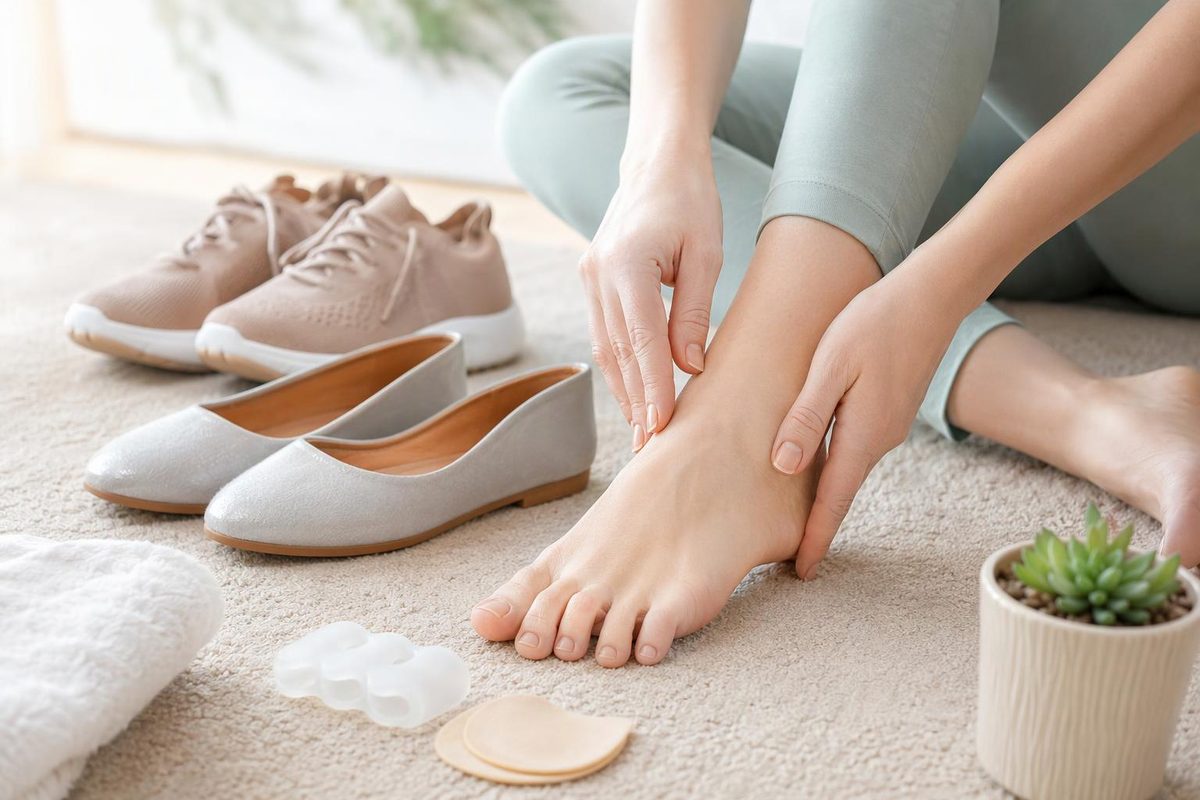
An early hammertoe may look like a small curl rather than an obvious deformity: the middle joint of a smaller toe rises while the tip points downward. The toe may still move easily, and walking may remain comfortable. Start by removing shoe pressure; whether the toe is still flexible helps determine what treatment may help. Cleveland Clinic’s hammertoe guide describes this early, flexible stage.
What should you look for?
With your shoes off, notice whether a smaller toe looks more bent than before. Clues can include:
- A raised middle joint that rubs against the shoe upper.
- Irritation or discomfort in closed shoes.
- A developing corn or callus over the raised joint or at the toe tip.
- Increasing stiffness or difficulty moving the toe.
These are recognized hammertoe symptoms, but they do not establish a diagnosis by themselves. A bend at the joint nearest the toenail is called a mallet toe, rather than a hammertoe, according to Mayo Clinic.
“Mild” is not the same as “flexible”
A small-looking bend or little pain does not tell you how mobile the joint is. Flexible means the toe can still be straightened; a rigid toe remains bent. A clinician checks this during an examination because it changes the treatment options. Do not force the toe straight to test it. AAOS explains the flexible-versus-rigid assessment.
Hammertoes can become stiffer over time, but the rate varies. Tight shoes can aggravate the problem; muscle and tendon imbalance, foot structure, neurological changes or an earlier injury may also contribute. Changing shoes is worthwhile, but it is not proof that shoes were the only cause. The American College of Foot and Ankle Surgeons (ACFAS) describes these causes and progression.
What can you do first?
Remove pressure in all three directions
For everyday walking shoes, check width, depth and length separately:
| Fit check | What you need |
|---|---|
| Width | A toe box that does not squeeze the smaller toes together or taper sharply toward them. |
| Depth | Clearance above the raised middle joint. A wide shoe can still have a shallow toe box. |
| Length | About half an inch—roughly 1.3 cm—between the longest toe and the inside tip of the shoe. The second toe may be longest. |
| Upper and heel | A soft, yielding upper and a low heel, rather than a stiff upper pressing on the joint or a high heel pushing the toes forward. |
These checks follow AAOS footwear advice and Mayo Clinic’s self-care guidance.
Try shoes standing and walking, with your usual socks and any prescribed inserts or pads. Fit matters more than the “wide” label: Cleveland Clinic recommends testing different styles and sizes for comfort in movement. Reject pressure on the raised joint rather than relying on a break-in period; Mayo Clinic recommends shoes that fit comfortably right away.
Use exercises and devices for a specific purpose
For a flexible toe, a clinician may recommend gentle manual stretching, towel scrunches or picking up small objects with the toes to stretch and strengthen foot muscles. Ask which movements suit your toe rather than trying to force correction. AAOS describes these exercises.
Nonmedicated pads can shield a rubbing corn, while orthotics may help control an underlying muscle/tendon imbalance. Avoid acid-containing corn pads, which can damage skin. ACFAS outlines these options and precautions. Clinician-recommended taping or straps may help position the toe and ease pressure and pain, as described by Mayo Clinic. These are different jobs—not interchangeable cures.
Can an early hammertoe straighten again?
Some flexible hammertoes may uncurl after pressure is removed, but permanent straightening is not guaranteed. The immediate goals are less rubbing, easier shoe wear and comfortable movement. Cleveland Clinic notes that early footwear changes can sometimes allow toes to uncurl.
Keep a simple note of discomfort, rubbing and stiffness after changing footwear or starting a prescribed treatment. Less pain is useful progress, but it does not by itself show that the joint is more flexible. Cleveland Clinic advises contacting your clinician if symptoms worsen or treatment has not helped after a few weeks.
When to get help
Arrange a podiatry or primary-care assessment for a new persistent toe bend, increasing stiffness, recurring corns or pain that affects walking. An open sore needs clinical attention rather than treatment as ordinary shoe rubbing. If you have diabetes, poor circulation or reduced feeling, consult a clinician before trying pads, straps or other self-treatment. Cleveland Clinic recommends assessment for toe changes, ACFAS identifies open sores as a more severe complication, and AAOS gives these self-treatment precautions.
An early assessment does not automatically mean surgery. Flexible hammertoes are generally approached with nonsurgical measures first; the examination helps match those measures to the toe’s mobility and the source of pressure.