
Can Super Shoes Cause Stress Fractures? The Evidence
New 2026 biomechanics data show small loading shifts, not proof of fractures. See when daily plated-shoe miles call for tapering or a medical check.
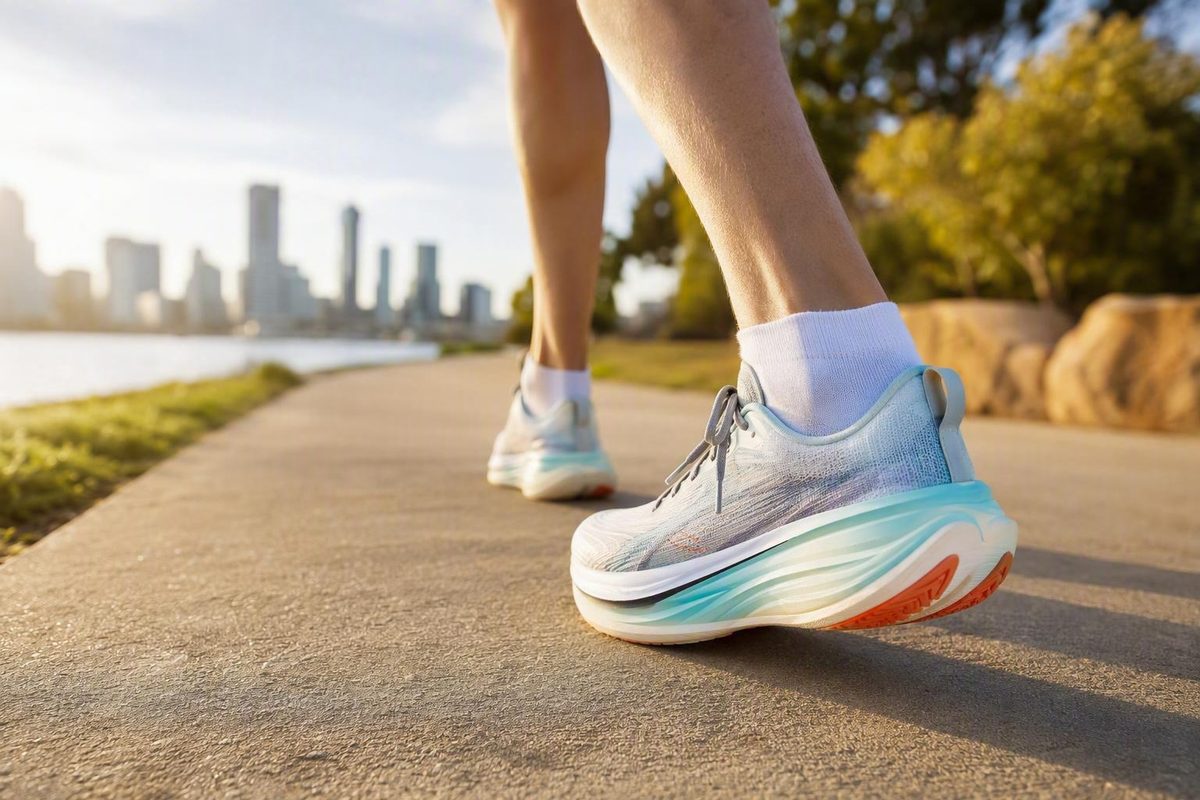
Super shoes have not been proven to cause stress fractures, but they may contribute to bone stress injury in some runners when their unfamiliar mechanics are repeated across daily mileage. A 2026 study found small shifts linked with bone stress injury in elite runners, while a separate 30-runner study found no systematic rise in loading rates. The practical verdict is to keep using them for races or selected sessions if you are pain-free, introduce regular use gradually, and stop for persistent focal midfoot pain, tenderness, or swelling.
Enter your plated-shoe exposure and injury history; the tool estimates your weekly miles in them and returns a precautionary next step.
Daily Miles in Plates Decision Tool
This is a precautionary triage tool, not a fracture-risk calculator. Research has not established a safe mileage percentage or transition duration.
Your Current Exposure
Result
Keep for races or selected sessions
No plated-shoe mileage or warning sign is entered. If you use the shoes, introduce them as a new training stimulus rather than replacing every run immediately.
Estimated weekly super-shoe exposure: —
What Each Study Actually Found
| Study | Sample And Shoes | BSI-Linked Finding | What It Cannot Show |
|---|---|---|---|
| Biomechanics 2026 PM&R elite-runner study | 23 healthy elite distance runners; neutral, responsive-foam and highly cushioned stiff-plate shoes | Lower cadence; higher rearfoot eversion; reduced ankle push-off | No injuries or fractures tracked |
| Biomechanics 2026 recreational treadmill study | 30 runners; Vaporfly 3, Invincible 3 and Levitate 5 at two speeds | No systematic rise across loading measures; Brooks had higher average and instantaneous loading rates than both Nike shoes | No bone stress or injuries tracked |
| Biomechanics 2025 recreational-men study | 15 recreational male runners; advanced versus conventional cushioned shoes | Foot-strike shift; lower ankle-joint reaction force and selected soleus and peroneus longus forces | Short-term mechanics do not establish injury prevention |
| Clinical Cases 2023 navicular case series | 5 runners using carbon-fiber-plate footwear | Navicular bone stress injuries, including a stress fracture in a 17-year-old steeplechase runner | No control group, incidence rate or causal estimate |
| Injury Rates Symposium-reported half-marathon study | 195 trainees; Nike Alphafly group and identical training programs | 53% lower reported injury rate in the Alphafly group | Nike-sponsored work with a Nike-affiliated researcher; not generalizable to every model |
| Injury Rates 10-month observational study | 271 advanced-footwear users and non-users | No statistically significant injury-rate difference reported | Observational shoe choice and training differences can confound results |
Sources: 2026 PM&R study, 30-runner study, 2023 case series, 2025 biomechanics study. Symposium and observational findings are reported in the article’s cited secondary summary. Unknown individual fracture probability: —.
The Evidence Shows Redistribution, Not Proven Causation
A typical super shoe combines responsive foam, a stiff embedded plate—often carbon fiber—and curved or rocker-shaped geometry. “Carbon-plated shoe” is a broader label, not a single mechanical category. Plate shape, stiffness, foam, stack height, fit and stability differ substantially between models.
Bone stress injury develops when repeated localized loading outpaces the bone’s recovery and adaptation. It is a continuum: early stress changes can progress to a more advanced injury and eventually a stress fracture. Footwear can be part of that loading equation, but current research has not established the absolute risk among super-shoe users or the risk relative to conventional shoes.
The most relevant new evidence is Biomechanics associated with bone stress injuries while using advanced footwear technology in elite distance runners, published online April 23, 2026, and in the May 2026 issue of PM&R. In trials involving 23 healthy elite distance runners, advanced footwear produced higher rearfoot eversion—an inward rolling movement—and lower cadence, both biomechanical variables associated with bone stress injury. The runners also pushed off less through the ankle, which could reduce demand in that region (2026 elite-runner study).
Those were small biomechanical shifts, not diagnosed injuries. The researchers did not follow the runners to see whether they later developed bone stress injuries or fractures. No measured cadence, eversion or loading-rate change has been validated as a personal fracture predictor.
A separate 2026 experiment studied 30 recreational runners at two treadmill speeds in three shoes: the carbon-plated Nike Vaporfly 3 with PEBA foam, the plate-free Nike Invincible 3 with PEBA foam, and the Brooks Levitate 5 with TPU foam. The Vaporfly improved running economy without systematically increasing all measured loading variables, and the trial did not track subsequent injuries (2026 recreational-runner study).
The model-level results undercut the idea that a plate alone determines impact. The Vaporfly had a higher average vertical loading rate than the Invincible, but the Brooks produced higher average and instantaneous loading rates than both Nike shoes. The relevant unit is the runner–shoe–speed interaction, not simply “plate versus no plate.”
Navicular Injuries Are a Signal, Not an Incidence Rate
The navicular is a bone in the midfoot, and it is the clearest recurring anatomical site in the published clinical concern about carbon-fiber-plate footwear.
A 2023 Current Opinion article in Sports Medicine presented five runners diagnosed with navicular bone stress injuries while using carbon-fiber-plate shoes. One was a 17-year-old elite steeplechase runner diagnosed with a navicular stress fracture after persistent pain. The authors described navicular bone stress injuries as high risk because some may not heal effectively without surgery (five-patient clinical case series).
Five cases cannot reveal how common the injury is. There was no comparison group of uninjured runners, and the report could not separate the effects of the plate, foam, geometry, training or individual anatomy. It therefore identified a safety signal rather than proving causation.
Other circumstances also mattered in some cases: previous navicular injury, current or former steeplechase participation, marathon training, a 22-mile run and removal of a normally used orthotic. These details do not rule out a footwear contribution. They show why an injury that follows a shoe change cannot automatically be attributed to the shoe.
The case series also does not show that navicular fractures are common among super-shoe users. The necessary denominator—the total number of exposed but uninjured runners—is unknown.
Super Shoes Can Reduce Demand in One Area and Shift It Elsewhere
“More impact” versus “less impact” is too simple a model. A shoe can reduce demand at the ankle while changing motion or force through the arch, forefoot, tibia or toe joints.
Reported short-term changes include lower cadence, longer steps, greater rearfoot eversion or inward arch movement, altered ankle mechanics, foot-strike shifts and model-dependent loading rates. The direction and size of these changes may depend on speed, surface, fatigue, anatomy and the specific shoe.
A 2025 study of 15 recreational male runners found that technologically advanced shoes shifted foot strike and reduced ankle-joint reaction force and selected soleus and peroneus longus muscle forces relative to conventional cushioned shoes (2025 biomechanical study). Those results could be favorable for certain ankle demands, but the study did not show that the footwear prevents fractures or other injuries.
This is not necessarily inconsistent with higher rearfoot eversion or lower cadence in another experiment. Reduced ankle demand can coexist with a novel loading pattern elsewhere. Likewise, a higher loading rate in one shoe comparison does not mean that a runner will be injured.
Repeated exposure could plausibly matter if local bone adaptation does not keep pace. That makes daily use a different question from wearing the shoes for occasional races. Research has not quantified the risk at either exposure level, however, and it has not produced a universal mileage limit or transition schedule.
Daily Use Adds Exposure Without a Known Risk Threshold
No study in the supplied evidence establishes that wearing super shoes for every run is safer or riskier than occasional use. There is also no evidence-based percentage of weekly mileage that turns safe use into unsafe use.
A conservative approach is to reserve them for races or selected faster sessions and keep a familiar conventional trainer in rotation. Rotation has not been proven to prevent stress fractures; it simply avoids repeating one unfamiliar loading pattern during every mile.
Treat a markedly different shoe as a new training stimulus. Begin with limited exposure rather than replacing every run at once. Avoid combining the switch with a sharp mileage increase, substantially more speed work, an unusually long run, removal of an orthotic or several other major changes.
Previous bone stress injury warrants additional caution, particularly after a navicular injury. The available evidence cannot quantify how much prior injury changes super-shoe-specific risk, so it does not support a universal ban. It does support a gradual transition and, where appropriate, individualized advice from a clinician familiar with the injury.
Foot strike does not provide a shortcut. No heel-, midfoot- or forefoot-strike pattern has been established as protective against super-shoe-related bone stress injury. The same model can also affect different runners differently.
Injury-Rate Research Remains Mixed
Long-term injury evidence is thinner than the evidence for improved running economy. Feeling faster, more comfortable or less sore does not establish that the shoe is protecting bone.
One symposium-reported study of 195 half-marathon trainees found a 53% lower injury rate in a Nike Alphafly group after identical training programs. The work was sponsored by Nike and included a Nike-affiliated researcher. A separate 10-month observational study of 271 runners reportedly found no statistically significant injury-rate difference between advanced-footwear users and non-users (injury-study summary and disclosures).
Neither result settles the daily-mileage question. Shoe choice, pace, experience, previous injury and training volume can differ between users and non-users. A result involving one model and one half-marathon program cannot be generalized to every plate, foam, distance or runner.
The studies also represent narrow populations. A treadmill trial in recreational runners does not reproduce months of outdoor training. A cohort of healthy elite distance runners does not represent beginners. A study of recreational men cannot resolve effects in women, adolescents, older runners or people returning from injury.
Prospective research would need to record the exact models used, miles and sessions in each shoe, training changes, previous injuries and clinically confirmed new bone stress injuries. Until those data exist, claims that super shoes either cause or prevent stress fractures go beyond the evidence.
Athlete Lawsuits Do Not Establish Medical Causation
Elite sprinters Damion Thomas Jr., Champion Allison and Abby Steiner have sued Puma, alleging that named racing shoes caused or contributed to serious foot and lower-leg injuries. The cited designs use carbon-fiber plates and nitrogen-infused foam. Puma strongly denies that its performance footwear causes injuries (report on the active Puma litigation).
The complaints are allegations in active litigation, not scientific findings or final judicial conclusions. An athlete’s account can establish chronology—a shoe change, training or racing, pain and a diagnosis—but it cannot independently separate footwear from workload, previous injury, event-specific forces, surface and recovery.
Such reports are useful for generating a testable question. Answering that question requires comparison groups and exposure data rather than chronology alone.
Persistent Focal Midfoot Pain Calls for Assessment
Do not treat persistent navicular or midfoot pain as normal adaptation to a stiff or highly cushioned shoe. Stop running and seek assessment from a qualified sports-medicine clinician when pain remains focal, repeatedly returns with loading, or is accompanied by localized tenderness or swelling.
Those symptoms do not prove that a stress fracture is present. Midfoot pain has multiple possible causes, and diagnosis may require an examination and appropriate imaging. The reason to stop is that continued loading can allow an early bone stress injury to progress.
Pain-free runners with normal recovery do not need to abandon super shoes solely because of the current studies. Keep races or selected sessions as the default if you want the conservative option. If you choose broader use, increase exposure gradually, retain familiar footwear and avoid changing training load at the same time.
There is no evidence-based ranking of the safest super shoes. Model-specific differences clearly matter, but existing research cannot identify one plate design, foam, stack height or rocker geometry as universally safest.