
Nail Fungus Can Spread, but Its Reach Has Limits
Body-wide fungal disease mainly involves unusual yeasts or molds and profound immune compromise. It is not a routine outcome of dermatophyte toenail fungus.
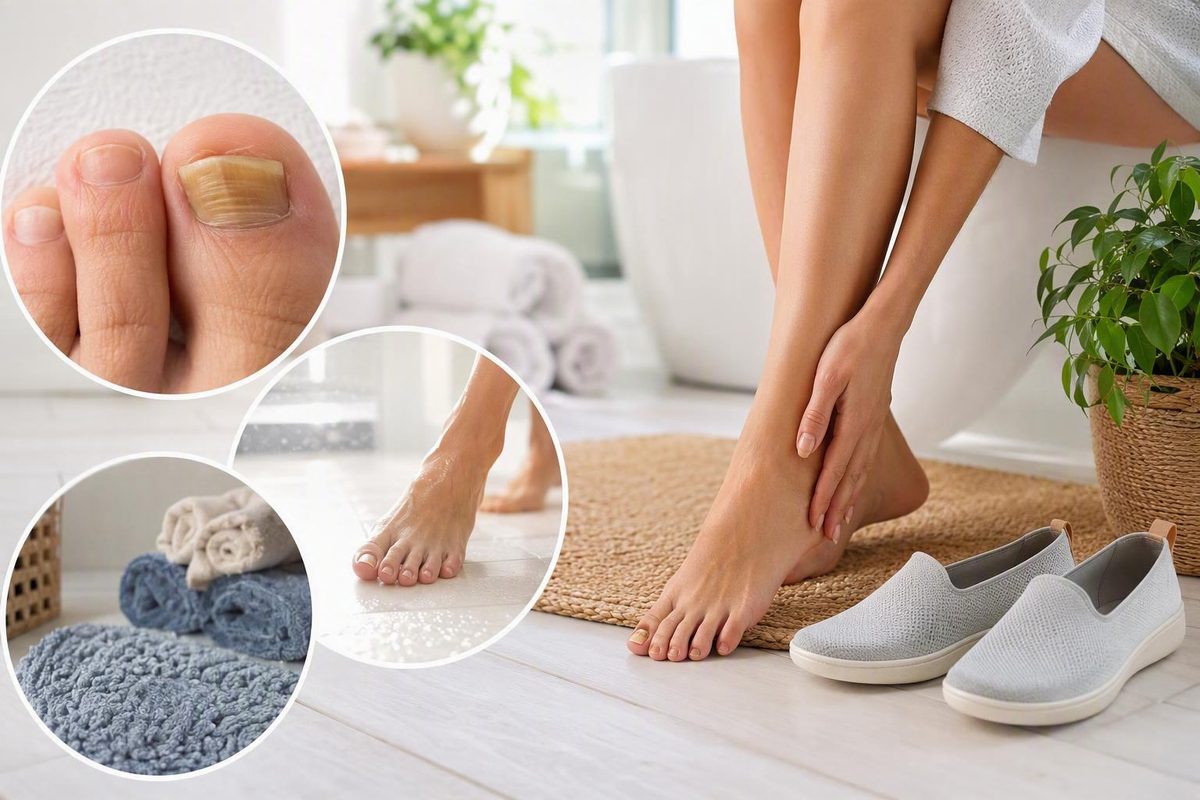
By The Shoes for Me editorial team · Updated 11 August 2026
Editorial note: This guide prioritizes peer-reviewed research and academic health-system information for its central medical claims. It provides general education rather than diagnosis or treatment.
The short answer: yes, nail fungus can spread
Many fungal nail infections can spread to another nail, nearby skin, or another person. Exposure does not guarantee that a new infection will develop, however. The condition of the nail and skin, persistent moisture, repeated exposure, and individual susceptibility may all affect whether fungus takes hold.
There is no reliable probability for transmission from one shared shower, borrowed towel, touch, or encounter with a damp floor. The available research supports the possibility of transmission but does not provide route-specific odds for an individual exposure. Household spread is documented, although the mechanisms and contributing behaviors remain incompletely understood (peer-reviewed household-transmission review).
It helps to separate four questions:
- Can it spread to another nail? Yes. An infection may gradually involve neighboring nails.
- Can it spread to nearby skin? Yes, particularly the skin around or between the toes.
- Can another person catch it? Yes. Household transmission can occur, but personal risk cannot be calculated precisely.
- Can it spread inside the body? Typical dermatophyte toenail fungus generally remains in nails and skin. Internal spread is extremely rare.
The terminology can be confusing. Onychomycosis is a general term for fungal nail infection, which may be caused by dermatophytes, yeasts, or non-dermatophyte molds. Tinea unguium specifically refers to a dermatophyte nail infection. Dermatophytes grow in keratin-containing tissues such as nails, skin, and hair and are the organisms most commonly associated with toenail fungus (Cleveland Clinic overview of toenail fungus).
Fungal infections can also affect fingernails, but the evidence should not be generalized to assume that every fingernail infection—or every infection caused by a yeast or mold—has identical routes, contagiousness, or risks.
A practical risk map is therefore:
- Other nails and nearby skin: established possible destinations.
- Partners and household members: transmission can occur, especially where shared exposures recur, but individual odds are unknown.
- The stomach, bloodstream, or internal organs: not a usual consequence of ordinary dermatophyte toenail fungus.
How fungus moves between nails and nearby skin
An untreated fungal infection in one toenail may gradually involve another toenail.
Plausible routes of self-spread include:
- Touching or picking at an affected nail and then handling another nail
- Using the same clipper or file on affected and apparently unaffected nails without cleaning it
- Moving directly from an affected toenail to a fingernail with the same grooming tool
- Leaving an accompanying fungal skin infection unaddressed
Persistent moisture is better understood as a condition that favors fungal survival and growth than as a separate route of transmission. Damp socks, sweaty footwear, and moisture left between the toes may create a more favorable environment after exposure.
A reasonable response is to treat the affected nail as a potential source of fungal material. Avoid picking at it, wash your hands after handling it, and clean reusable tools before using them on another nail. These are exposure-reduction precautions, not guarantees that spread will stop.
The nail and nearby skin form a connected environment. A dermatophyte infection between the toes is commonly called athlete’s foot, or tinea pedis. Athlete’s foot may extend from the skin into a toenail, while fungal nail infection may occur alongside or spread to surrounding skin. Peeling, itching, scaling, or cracking between the toes therefore deserves attention, although those symptoms can also have nonfungal causes.
More distant skin involvement, including the groin, is possible but less common than infection of neighboring nails or the skin around and between the toes. Clinical guidance describes gradual spread to other toenails and nearby skin while also identifying previous athlete’s foot, moisture, nail injury, diabetes, circulation problems, and weakened immunity as susceptibility factors (overview of toenail-fungus spread and risk factors).
Importantly, not every yellow, white, thickened, ridged, brittle, or damaged nail contains contagious fungus. Shoe pressure, an old injury, psoriasis, and other nail disorders may produce similar changes. Before treating a changed nail as an infectious source, consider whether the diagnosis has been established.
Can you pass nail fungus to a partner or household member?
Yes. Fungal nail infection can pass between people in a household through direct contact or indirect exposure to contaminated personal items and shared surfaces.
Possible household exposures include:
- Shoes or slippers
- Socks
- Towels
- Nail clippers and files
- Bathroom or shower surfaces
- Other materials that repeatedly contact affected feet or nails
These are possible routes, not a ranking of proven causes. Research generally cannot establish which particular object, surface, or behavior caused an infection in an individual household.
The strongest available evidence comes from a peer-reviewed scoping review of onychomycosis and related dermatophyte infections. Molecular studies included in the review identified household members infected with the same dermatophyte strain, supporting transmission within households. The review reported evidence of transmission in 44% to 47% of studied households that already had at least one affected member (review of transmission between household members).
That figure does not mean a partner has a 44% to 47% chance of catching nail fungus. It describes findings at the household level, not an individual attack rate. It also cannot reveal the risk from sharing one shower, touching one foot, or borrowing shoes once.
People who live together may encounter the same bathroom surfaces, textiles, footwear, or grooming equipment many times. That creates repeated opportunities for exposure, but the evidence does not provide a precise comparison between repeated household contact and a single encounter.
Contagiousness means transmission is possible, not certain. One household member may remain unaffected, while another may be more susceptible because of nail trauma, persistent moisture, athlete’s foot, diabetes, poor circulation, age-related nail changes, or weakened immune function.
Proportionate precautions focus on limiting shared exposure rather than isolating the affected person. Keep personal foot-care items separate, avoid sharing footwear and towels, and allow wet bathroom areas to dry while the nail change is being evaluated or addressed.
The main transmission routes and conditions that favor infection
Nail fungus may spread through several overlapping routes. The route of exposure should be distinguished from the conditions that make an infection more likely to become established.
1. Direct contact
Direct contact means touching an affected nail or infected nearby skin. Contact does not automatically cause another infection. Washing your hands after handling the nail is a reasonable precaution before touching another nail or another person’s feet.
2. Self-spread
Self-spread occurs when fungal material moves from one part of the body to another. Examples include using one file across several nails or handling an affected toenail immediately before touching another nail. Athlete’s foot may also provide a source from which infection reaches a toenail.
3. Contaminated personal items
Objects that contact affected nails or feet may carry fungal material. Commonly implicated items include:
- Nail clippers
- Nail files and other grooming tools
- Towels
- Socks
- Shoes
- Shared slippers
- Reusable foot-care equipment
Reusable salon instruments are another possible route when they are not adequately sanitized between customers. This does not mean every manicure or pedicure is risky; it means instrument-handling practices are relevant when tools are reused.
4. Shared damp surfaces
Public showers, locker-room floors, pool surrounds, and similar communal wet areas may provide opportunities for exposure. Warm, moist conditions favor fungi associated with common toenail infections, making sweaty socks, damp footwear, poorly dried toe webs, and prolonged use of closed shoes relevant. Nail fungus may affect toenails or fingernails, and possible exposure settings include communal wet areas, contaminated tools, and household contact (dermatology guide to nail-fungus exposure).
Exposure and infection are not the same. Two people can encounter the same surface without having the same outcome. Factors associated with greater susceptibility include:
- Older age
- Previous or current athlete’s foot
- Persistent moisture or heavy sweating
- Nail trauma or repeated pressure
- Damaged skin around a nail
- Diabetes
- Poor circulation
- Weakened immune function
These factors cannot be converted into a personal percentage. Nor does the evidence reliably rank a shower floor against a towel, shoe, clipper, or direct contact. The practical response is layered: reduce avoidable exposure, limit persistent moisture, protect damaged nails and skin, and take additional care when health conditions make complications more consequential.
A practical plan to reduce spread
No hygiene routine can promise that transmission will stop completely. The goal is to reduce opportunities for repeated exposure to your other nails, nearby skin, and the people who share your home.
Keep feet clean and dry
Wash your feet routinely and dry them carefully, especially between the toes. Change damp or sweaty socks rather than leaving your feet in a persistently moist environment. Allow wet or heavily sweaty shoes to dry before wearing them again.
Perfect dryness throughout the day is neither realistic nor necessary. Focus on avoidable, prolonged moisture, such as wet socks after exercise, shoes that never get time to dry, or dampness left between the toes after bathing.
Use nail tools carefully
Do not use the same uncleaned clipper or file on an affected nail and an apparently unaffected nail. Clean reusable tools between uses. If practical, keep a separate set for the affected nail while its diagnosis and treatment status remain uncertain.
Avoid picking, tearing, or aggressively digging beneath the nail. Wash your hands after touching or trimming it, particularly before handling other nails.
Separate personal items
While fungal infection is suspected or being addressed, avoid sharing:
- Towels
- Socks
- Shoes or slippers
- Nail clippers
- Nail files
- Other equipment that directly contacts the affected feet or nails
Keeping these items separate reduces opportunities for shared exposure. It does not mean the person with the nail change must be isolated from normal household life.
Protect your feet in communal wet spaces
Wear sandals, flip-flops, or shower shoes on public-shower floors, pool decks, and in locker rooms. Protective footwear is a reasonable exposure-reduction precaution, but it cannot eliminate all contact with fungi.
Ask about salon sanitation
Before a manicure or pedicure, ask how reusable instruments are sanitized between customers. Do not share personal nail tools. If you are concerned about a painful or inflamed nail or surrounding skin, seek an assessment rather than relying on cosmetic nail care to identify the cause.
Pay attention to the skin between the toes
Peeling, itching, scaling, or cracking between the toes may indicate athlete’s foot, although other skin conditions can look similar. Because athlete’s foot may extend into a toenail, persistent symptoms should not simply be ignored.
Commonly advised precautions include keeping feet dry, allowing footwear to dry, changing damp socks, wearing protective footwear in communal areas, avoiding shared foot-care items, and cleaning nail tools between uses (physician-authored prevention guidance).
Ordinary precautions are more proportionate than trying to sterilize an entire home. The available evidence does not establish that household members require separate showers.
If you share a bathroom, allow wet areas to dry and avoid sharing towels or grooming equipment. These manageable steps target repeated exposure without creating an impractical routine.
Can nail fungus spread to the bloodstream or internal organs?
For a typical dermatophyte toenail infection, internal spread is not expected. Dermatophytes ordinarily remain in keratin-containing tissues such as nails, skin, and hair. Toenail fungus does not usually spread to the stomach or other internal organs (Nebraska Medicine dermatologist-authored guidance).
Local and internal spread are different processes. Fungus moving from a toenail to another nail or the skin between the toes is plausible and established. That is not the same as fungus entering the bloodstream or invading an organ.
It is also important to distinguish fungal spread from a secondary bacterial infection. Damaged or sore skin around an affected nail may give bacteria an entry point through a cut or sore. Spreading redness, swelling, drainage, sores, or significant and increasing pain may therefore indicate a complication rather than uncomplicated progression of nail fungus.
Reports of toenail fungus spreading internally or through the bloodstream are extremely rare. Severe or disseminated fungal disease is primarily an exceptional concern involving unusual yeasts or molds and profound immune compromise—not a routine outcome of ordinary dermatophyte toenail fungus. Diabetes, circulation problems, and weakened immunity can make skin breakdown or secondary infection more consequential, but they do not mean that ordinary nail fungus commonly becomes systemic (physician-authored overview of internal spread and complications).
People with those health conditions should seek medical guidance rather than assuming every nail change is harmless.
Make sure the nail change is actually fungal
Possible signs of fungal nail infection include:
- Yellow, white, brown, or otherwise altered nail color
- Thickening
- Brittleness or crumbling
- Distortion of the nail
- Debris beneath it
- Separation from the nail bed
- Discomfort or sensitivity
None of these findings confirms fungus by itself. A nail may remain thick or discolored after trauma. Repeated shoe pressure can alter its shape, while psoriasis and other nail disorders may resemble onychomycosis.
That uncertainty matters for two reasons. First, a nonfungal nail change may not carry the transmission concern assumed here. Second, prolonged antifungal treatment and extensive household precautions may be misplaced if fungus is not present.
A clinician can examine the nail, review its history, assess the surrounding skin, and decide whether laboratory testing is appropriate. Testing may involve collecting nail material for examination because appearance alone may not confirm a fungal cause (Cleveland Clinic diagnosis and testing overview).
Treatment should not be selected solely from a photograph or symptom list. The appropriate approach depends on the diagnosis, how much of the nail is involved, whether several nails are affected, accompanying skin infection, other health conditions, and the risks of a proposed medication or procedure.
Visible improvement also does not prove that fungus has been eliminated or that transmission is no longer possible. Appearance is not a direct measure of microbiological cure, so precautions should not be abandoned solely because a nail looks better.
When to seek medical guidance
Arrange a clinical assessment when:
- You are unsure whether the nail change is fungal
- The nail is painful
- Several nails are involved
- The nail or surrounding skin is worsening
- The skin is broken, inflamed, sore, or draining
- The problem persists despite routine foot care
- Nail changes interfere with walking or footwear
- Athlete’s foot or similar skin changes keep recurring
People with diabetes, poor circulation, or weakened immunity should seek medical guidance rather than relying only on self-care. These conditions can make wounds, delayed healing, secondary bacterial infection, or an atypical fungal infection more consequential.
Seek more prompt evaluation for spreading redness, marked swelling, sores, drainage, or significant or rapidly increasing pain. These signs may reflect a complication affecting the surrounding skin rather than an uncomplicated fungal nail.
This article provides general educational information. It cannot determine whether a nail change is fungal, identify the organism, assess circulation, or replace care from a qualified clinician. The site’s role and limitations are explained in The Shoes for Me Terms of Use.
A simple decision guide is:
- Uncertain but otherwise stable nail change: use sensible hygiene precautions while arranging routine assessment.
- Suspected fungal change without concerning symptoms: reduce persistent moisture and shared exposure while seeking guidance on diagnosis and management.
- Diabetes, poor circulation, or weakened immunity: contact a healthcare professional rather than depending solely on home care.
- Spreading redness, swelling, sores, broken skin, drainage, or significant pain: seek more prompt evaluation.
Frequently asked questions
How quickly can nail fungus spread to another nail?
There is no dependable timeline. An untreated infection may gradually involve a neighboring nail, but the evidence does not establish how quickly this usually happens or that it will happen in every case.
Moisture, nail injury, athlete’s foot, contaminated tools, and individual susceptibility may be relevant. If another nail begins changing, do not assume automatically that fungus has spread; similar-looking changes can have other causes.
Can I pass toenail fungus to my partner by sharing a shower, towels, or shoes?
Yes, transmission through contaminated personal items or shared damp surfaces is possible. Towels, shoes, socks, nail tools, and bathroom surfaces are plausible routes, but the risk from any one item or encounter has not been quantified.
Avoid sharing towels, footwear, and nail equipment, and allow shared wet areas to dry. Separate showers are not established as necessary.
Does athlete’s foot spread to the toenails?
Yes. Athlete’s foot and many fungal toenail infections involve dermatophytes, so infection may extend from the skin of the foot into a toenail. A fungal nail infection may also occur with or spread to nearby skin.
Peeling, itching, scaling, or cracking between the toes can have causes other than fungus. Seek an assessment if the diagnosis is uncertain, symptoms persist, or the skin becomes painful or broken.
Does treatment immediately make nail fungus noncontagious?
It should not be assumed that treatment immediately eliminates transmission risk.
Continue proportionate precautions—such as keeping personal items separate, cleaning nail tools, limiting persistent moisture, and wearing footwear in communal wet areas—while following guidance for the confirmed diagnosis.
Can nail fungus spread to the stomach or bloodstream?
Ordinary dermatophyte toenail fungus does not usually spread to the stomach, bloodstream, or internal organs. It generally remains in keratin-containing nails, skin, and hair.
Internal spread is extremely rare and is mainly an exceptional concern involving unusual organisms or profound immune compromise. A more practical concern is secondary bacterial infection through damaged surrounding skin. Seek guidance for spreading redness, swelling, sores, drainage, or substantial pain, particularly if you have diabetes, poor circulation, or weakened immunity.
The calibrated answer to “can a nail fungus spread?” is yes: it can reach other nails, nearby skin, and other people through direct contact or exposure to contaminated items and damp shared environments. Infection is not inevitable, and the odds from a particular encounter remain unknown.
A manageable routine is more useful than alarm. Keep feet and footwear dry, change damp socks, avoid sharing foot-care items, clean nail tools between uses, wear sandals in communal wet areas, and address possible athlete’s foot. Because appearance alone cannot establish a fungal diagnosis, persistent or painful changes deserve evaluation—especially when diabetes, poor circulation, weakened immunity, or concerning surrounding-skin symptoms are present.