
Bruise on Top of Foot: Causes, Care and Shoe-Fit Checks
Understand top-of-foot bruising, injury clues and warning signs, plus care for a minor bruise and shoe-fit changes that reduce pressure.
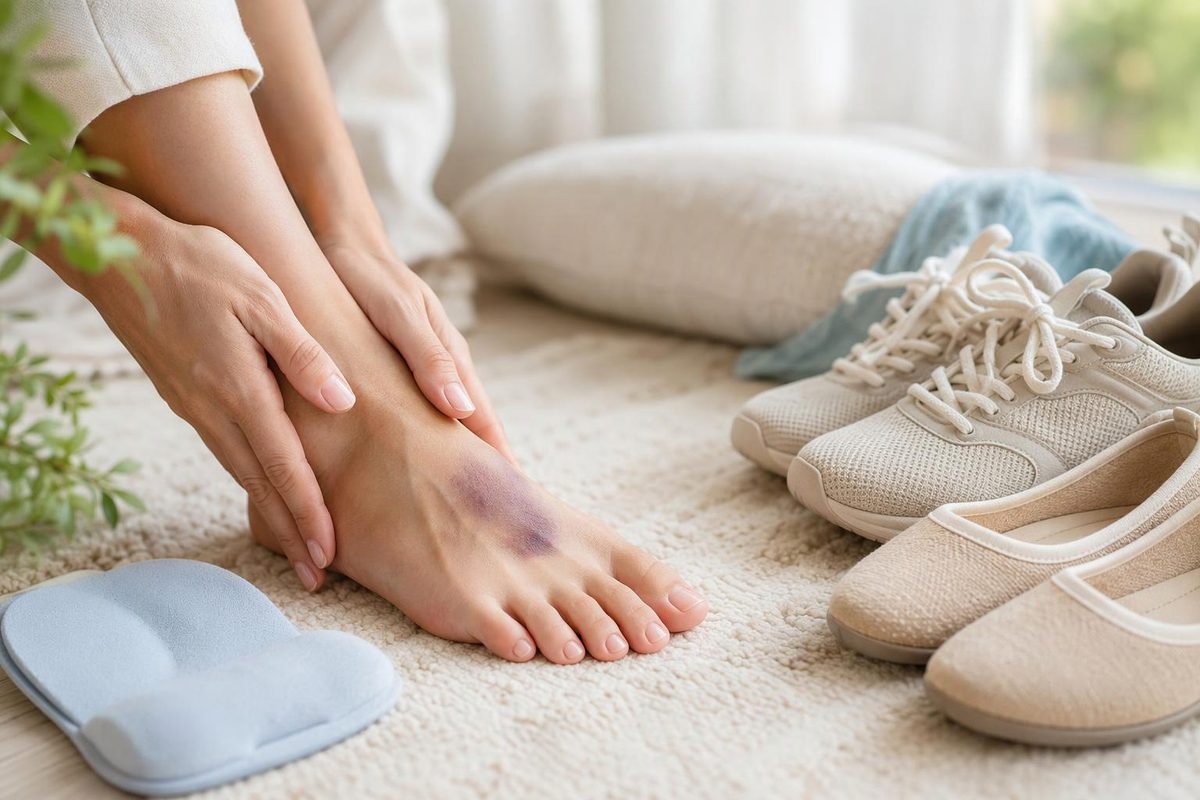
A bruise on top of your foot means small blood vessels have leaked blood into the tissue beneath the skin. A bump or dropped object can cause it, but bruising can also accompany a sprain or broken bone. The colour alone cannot tell you how serious the injury is. MedlinePlus explains how bruises form.
Being able to walk does not rule out a fracture. Pay attention to how the bruise started, where the pain is and whether swelling or walking difficulty is increasing—not just the size of the mark. Mayo Clinic notes that some foot fractures still allow walking.
When to get medical help
Seek emergency care if the injured foot is misshapen, becomes cold or numb, or has a feeling of extreme tight pressure, especially with severe pain. Coldness or numbness is different from an ordinary localised bruise. These signs can indicate a serious injury or dangerous pressure buildup. NHS injury guidance and MedlinePlus bruise guidance describe these warning signs.
Get urgent assessment if:
- You cannot bear weight or walk more than a few steps.
- Pain is severe or worsening, or swelling and bruising are extensive or increasing.
- The foot is hot and swollen, especially with fever, spreading redness or drainage.
- After a twist or fall, you have midfoot pain and bruising that also appears on the sole. This pattern raises concern for a Lisfranc injury, involving the joints and ligaments that stabilise the middle of the foot.
These patterns need more than a shoe change. See NHS injury guidance, NHS top-of-foot guidance and AAOS guidance on Lisfranc injuries.
Arrange a medical review for bruising without a remembered injury, particularly if it recurs. Blood-thinning medicines can make bruising easier; mention all medicines you take. If you have diabetes and foot pain, seek advice rather than relying on home care alone. MedlinePlus and the NHS support these precautions.
What the pattern may suggest
A direct knock or dropped object
A tender patch where something struck the foot may be a soft-tissue bruise, also called a contusion. But a heavy object can break a bone too. Persistent pain, swelling or difficulty walking should not be dismissed as “just bruising.” Mayo Clinic lists direct impacts among causes of foot fractures.
A twist, misstep or sports injury
Bruising with swelling can follow a sprain—an injury to a ligament—or a strain, involving muscle. NHS guidance explains these injuries. A midfoot injury can look like a routine sprain while actually damaging the Lisfranc joint complex. AAOS explains why these injuries can be mistaken for sprains.
Gradual pain after more running or walking
A stress fracture is an overuse bone injury. Clues include pain that worsens with weight-bearing, tenderness over one spot, swelling on top of the foot and sometimes bruising. There may be no single accident. If this pattern fits, stop impact exercise, avoid putting weight on the foot and arrange assessment as soon as possible. Early X-rays can miss stress fractures. AAOS describes these symptoms, precautions and imaging limits.
Caring for a minor bruise
Home care is reasonable for a small bruise after a minor knock when pain is mild, walking is comfortable and no warning signs apply. If you are unsure how badly you injured the foot, ask for medical advice first.
- Rest from painful activity. Do not keep running or take long walks to test it.
- Use a wrapped cold pack for up to 20 minutes every two to three hours. Never put ice directly on skin.
- Raise the foot when resting to help swelling settle.
- Ask a pharmacist about suitable pain relief if needed.
These measures follow NHS guidance for pain on top of the foot. Do not use fading colour as proof that an underlying injury has healed. Seek review sooner if symptoms worsen or pain stops normal activities, and if pain has not improved after two weeks of home care.
Check pressure over the top of the foot
Tight shoes can cause top-of-foot pain, but a new bruise should not automatically be blamed on laces. For an otherwise minor injury, check:
- Depth: the upper and tongue should not press on the tender area. A wider shoe may still be too shallow.
- Fastening: loosen pressure over the sore spot while keeping the foot secure. If that is not possible, use a different shoe.
- Insole space: an added insert takes up room. Avoid stacking cushioning into an already tight shoe.
- Walking comfort: choose a roomy, low-heeled shoe for necessary short walks, not a tight dress shoe. Do not try to “break in” pressure over a bruise.
Guy’s and St Thomas’ shoe-fit guidance explains depth, adjustable fastenings and room for insoles. These changes can reduce pressure; they do not treat a fracture or torn ligament.